

When I left you in June, the calendar did what calendars do… you have intentions, and then life steps in. Two months have gone by (bye?). There were jobs, other cities, a documentary about people who make markets on hurricanes and hot dog contests, the baseball hall of fame and its most boring parade in the universe, corporate blah blah blah, failed recruitment by a companion AI company, advancement for an innovative AI residency in DC, and a two-week window in August set aside for college tours with the triplets, which was its own kind of production, with its own unspoken call sheets, questionable meals, and no set wrap times.
I’m also thinking a lot about my 2012 film Welcome To The Machine. Back then nobody was really talking about how technology affects us as humans. Now it’s the public discourse. That film was bound up with the triplets being born and starting to grow. This year the kids are in their last year of high school and are preparing to go forth into the wider world.
Meanwhile, Films Not Made has been on its own schedule. A bit of a hiatus for the summer but Three episodes have gone out since the last dispatch and the live episode we taped at DC/DOX in June is in the edit.
Episode 10: What I Was Doing While You Were Breeding - Blair Breard and Kristin Newman
Episode 11: Repairman - Rex Pickett
Episode 12: Roadside Attraction - Conrad Vernon and Harland Williams
The fall season is revving up and we have some very cool stuff we are planning and will be sharing very soon!
As ever - if you have any sound needs - don’t hesitate to call.
Now… As I recall, it was raining in Nashville, and something about a rock star…
March 5, 2024: 3rd and Lindsley
In which a New Yorker vouches for a Nashville bagel, and four musicians hold a summit on the floor of a venue that has seen more rhinestones than most cowboy hat factories.
[ PHOTO: Mar 5, 2024 - load-in at 3rd and Lindsley, rain on the gear ]
A Small Puddle in Our Wake
The never-ending carousel of Nashville's capricious spring weather greeted us with a rain shower that felt like a warm embrace from an overenthusiastic relative. We found ourselves rendezvousing with the eclectic ensemble of Sheryl Crow, Luke Bryan, Shaboozey, and Jaimee Harris, an assembly that could only be described as Nashville's version of The Avengers.
Our base of operations for the day was 3rd and Lindsley, a venue that has seen more boots and rhinestones than a cowboy hat factory. As we trudged in with our gear, creating a small puddle in our wake, the aroma of bagels and cream cheese wafted through the air, a scent as rare in these parts as a taxi cab in Mayberry. Margo, with the authority of a seasoned New Yorker, declared the bagels "legit." Skeptical yet hopeful, I ventured to partake in this culinary anomaly, slathering my choice with scallion cream cheese. To my surprise, it was not bad at all, a beacon of hope in a sea of biscuits and gravy.
A scent as rare in these parts as a taxi cab in Mayberry.
Sound check was a meticulous dance, each act taking their turn in the spotlight, their practiced chords and melodies spilling into the room, captured by our eager microphones. As the echoes of sound checks faded, Michelle settled into an intimate tete-a-tete with Sheryl Crow, delving into the roots and wings of her music journey.
Sheryl waxed lyrical about the omnipresent influence of country music in her life, reminiscing about her small-town upbringing where the radio was a window to the world, and genres were not so much boundaries but a melting pot of influences. In a world where genres are increasingly blurred, Sheryl urged aspiring musicians to dive deep into the wellsprings of the great American songbook and immerse themselves in the art and process of music. Her career, seasoned with the lack of cellphones and the intimate camaraderie of tour buses, reminded us of the unadulterated essence of music-making. Sheryl's narrative wove through the threads of activism, the slow ascent of the glass ceiling in the industry, and the empowerment of women who've grown to eclipse the industry itself.
As the interview delved deeper, Sheryl's passion for music as a magical, divine force that "changes the molecules" became palpable. She reminisced about a childhood dream where she and Paul McCartney, perched on a tree, penned the greatest song never sung. Now, with guitar in hand, she embraces solitude to unearth musical treasures, affirming the sanctity of music as a collective beyond the confines of Spotify. And no, she is "not a bitch."
Then, Luke and Sheryl had a tableside pre-show conversation that covered all the bases of her life as well as Luke's take on fame, touring, songwriting and dealing with record labels. Luke also confessed to secretly loving NWA deep in the Georgia woods, as well as his son's similar sneak-aways on the Polaris to listen to Travis Scott. Like father, like son.
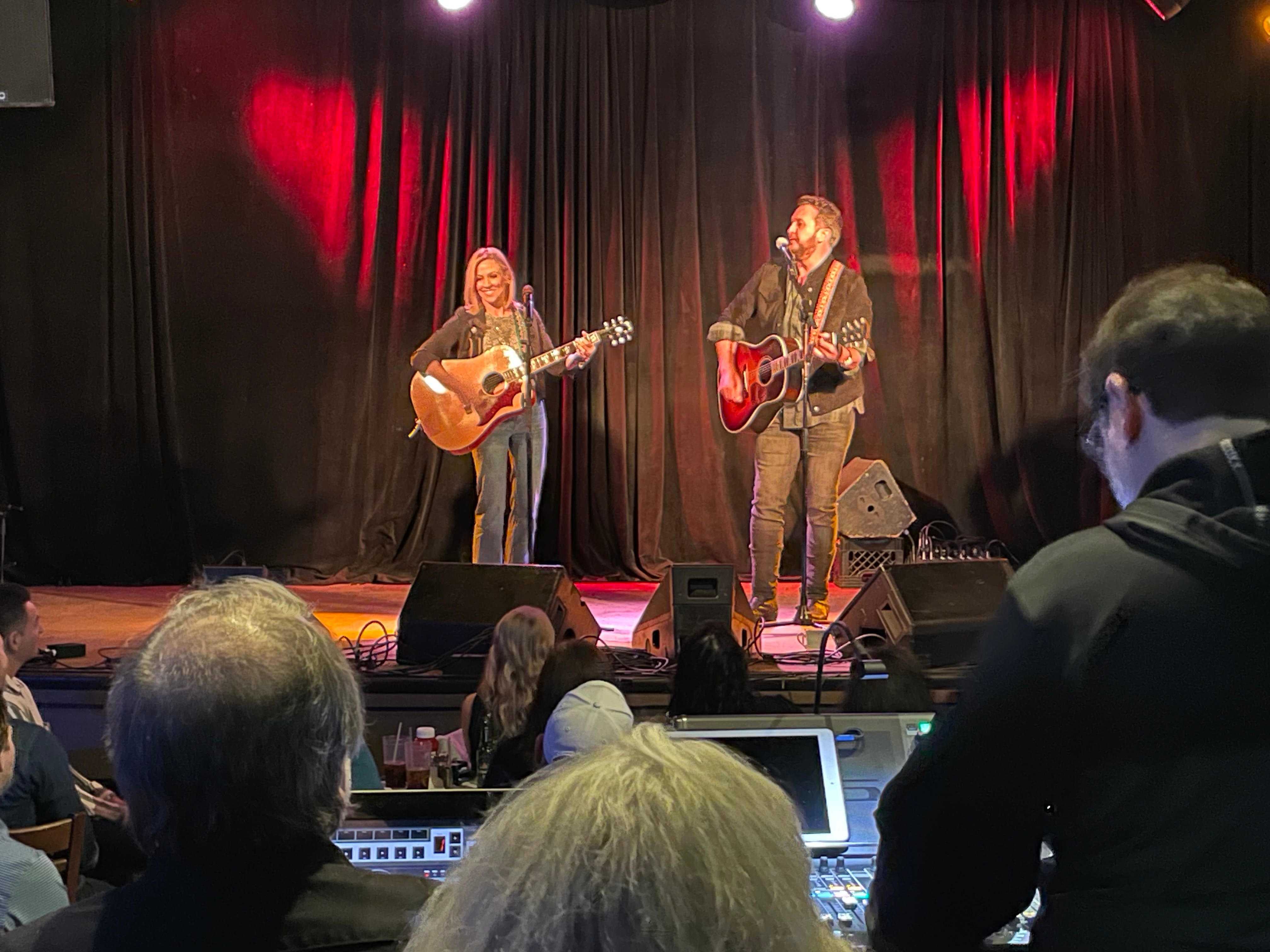
And then the show was on! Sheryl did her happy song which brought cheers to the crowd and then Luke stepped up for a duet with him performing the role of Kid Rock. It was all super great, they played their hearts out, did a few takes and left the crowd cheering.
Backstage, amidst a jumble of guitar cases and mic stands, Sheryl, Luke, Shaboozey, and Jaimee Harris huddled for a heart-to-heart that felt more like a summit of musical minds than casual banter. Jaimee, with roots deep in Waco, spoke of sobriety as her muse, her words painting a portrait of resilience and rebirth through song. Shaboozey, with his Virginia lineage, nodded in agreement, musing on the universal fabric of America that their music weaves.
The conversation meandered through the alleys of creation and connection, with Sheryl advocating for the pure, unadulterated joy of making music, untainted by the whirlwind of fame. Shaboozey, a one-man band behind his videos, reminisced about the days of Creem magazine and his reverence for Zeppelin, highlighting the myriad tools now at their disposal. Luke chimed in with tales of shoestring-budget videos that somehow captured the imagination of millions, his laughter echoing his mantra: Music is, above all, fun.
As the dialogue deepened, Sheryl, with the wisdom of a sage, quoted Churchill, urging them to tune out the noise and stay true to their course. "Don't compare, stick with your people," she advised. Luke spoke of finding a label that allowed him to blossom at his own pace, his words a reminder to always seek out the path that dares you to tread it. "Anything you can imagine is smaller than you deserve," someone mused. "Dare to suck!"
"Anything you can imagine is smaller than you deserve." "Dare to suck!"
And then we were done. We packed up and got out. As for lunch - it was a blur. I was tied up to the point where I ate when I could, a piece of mahi here, a slider there, and then an ordered additional lunch which came too early for me to eat and then too late to enjoy as the music just kept coming. I shared my tacos with Margo and took the rest home in a bag to have for dinner. With a meal like that, there is no review, just dreams of something greater for tomorrow.
March 8, 2024: Omaha
In which the something greater arrives in a clamshell container, a salad is liquidated rather than eaten, a grown man orders off the children's menu, and the series finds the ending it was looking for the whole time.
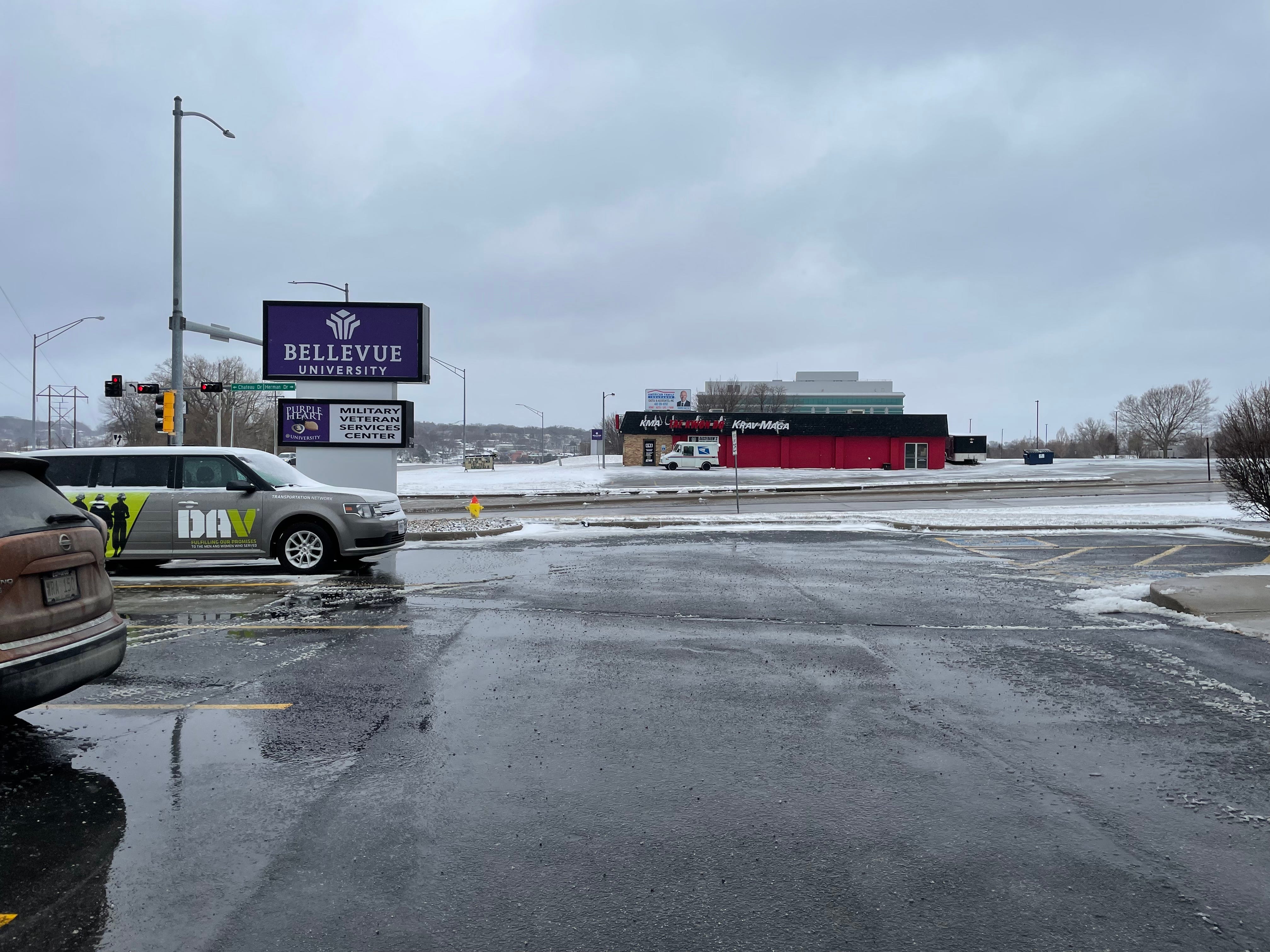
Landing in Omaha was like stepping onto a set from a 1980s flick; the airport, a shrine to the era with its dusty rose hues and poured concrete, seemed more like a relic than a gateway. Snow blanketed the ground upon waking, a stark contrast to the candied warmth of the chai latte I nursed in the van, pondering the day ahead and the peculiar inquiry at the Starbucks: "Tea or coffee chai?" Ah, the enigmas of Nebraska.
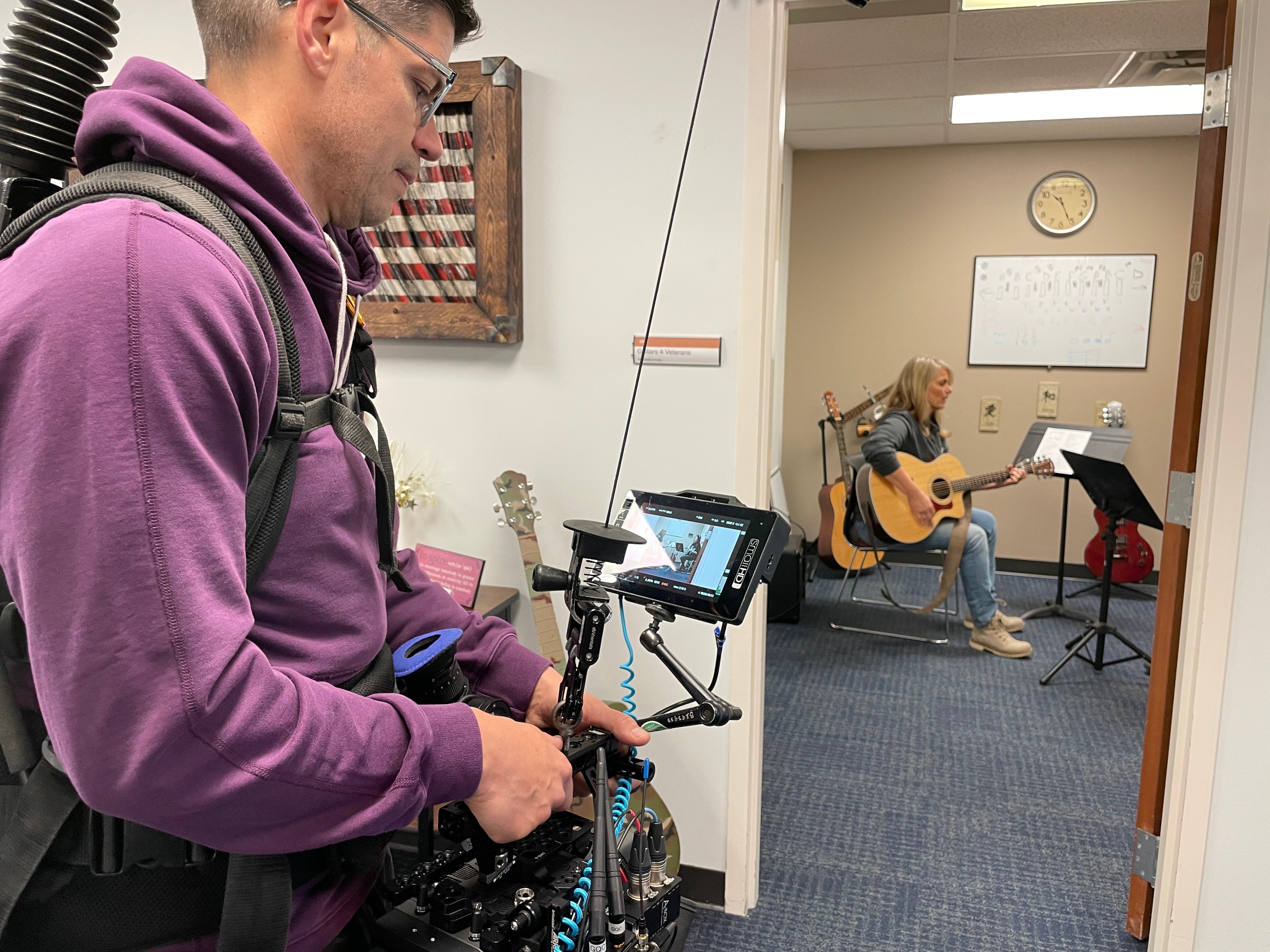
Just outside the University, a Krav Maga studio stood, incongruously promising combat prowess amidst academic calm. Then, at Guitars For Vets, Taylor and Ashley strummed "Wagon Wheel," a melody transporting me back to a balmy Brooklyn evening with Old Crow Medicine Show, a prelude to Willie Nelson. The circle of music spun, "It's all country," indeed.
But beneath the chords and melodies, a deeper resonance emerged. The strumming wasn't just about music; it was a lifeline, a shared rhythm beating back the isolation of PTSD. Vets helping vets, through the universal language of music, where a simple G, C, and D could be the beginning of a new chapter. Here, in the heartland, amidst the remnants of cornfields, we discovered that healing often comes with a soundtrack, and sometimes, all you need are three chords and the truth.
Healing often comes with a soundtrack, and sometimes, all you need are three chords and the truth.
Over at Taylor's house, an unexpected duet between Taylor and her daughter Jordan unfolded, their voices intertwining in "On the Road" and "Closer to Fine." Memories flooded back of the Indigo Girls' harmonies echoing through the Orpheum in Boston and under Virginia's open skies.
Taylor's interview then peeled back layers of her life, her narrative a country ballad in itself, stitched together with the classics of Dolly, Waylon, Willie, Reba, and The Judds. It was Brad Paisley and Rascal Flatts for her kids, but for Taylor, Carrie Underwood's "I Will See You Again" held the echo of her sister's absence, a testament to the stoic resolve, "No tears fall on this face."
She spoke of the song within her, a yearning translated into "Road to Colorado," a journey through the fragmented landscapes of her life, seeking a mosaic called home.
Obsessed with the twang and tales of country legends from a young age, Taylor found solace in Loretta Lynn's ballads, the Opry, and HeeHaw. The shadow of PTSD, inherited from her Vietnam vet father, later claimed a place in her own story, her life a patchwork of identities until music offered her a name and a narrative of her own.
Now, she's the bard for fellow vets, guided by mentors like Dave Mike, who taught her the power of music and leadership. Her mission, clear: to prevent the ripple of hurt that follows a soldier's untimely departure. She vowed to show her daughter strength, not burden; to heal and to dream bigger, with music as her compass.
Lunch descended upon us like a mystery novel with the last page torn out, the establishment's name lost to the annals of lunchtime lore. Michelle, our culinary Columbus, set sail towards the uncharted waters of the salmon salad, a solitary beacon of hope in a tempest-tossed sea of fryer-born fare. I followed in my dinghy.
Tabitha, our gluten-averse gastronome, presented a pizza that dared to flirt with the avant-garde, slathered in a duet of cheeses that boldly questioned, "Who needs tomato sauce?" Meanwhile, the specter of a "taco pizza" crowned with the fiery plumage of Hot Cheetos lingered in the air, a dish conjured from the depths of a snack food fever dream.
The reveal of my salmon salad was met with gasps worthy of a Victorian parlor, the fish sprawling across the greens like Moby Dick beached upon a salad bar. This wasn't just lunch; it was a culinary leviathan, a Poseidon of the plate. I ate it with fervor.
The fish sprawling across the greens like Moby Dick beached upon a salad bar.
Shelley's treatise on the Herculean effort required to tackle a salad struck me as a bizarre new world order, where chewing became an Olympic sport and the wide-mouthed chomp was king. Jiy's nod to this leafy conundrum, suggesting an oral agility test for the modern diner, left me adrift in a sea of generational salad skepticism. Had the humble salad become the Rubicon of the age, separating us one forkful at a time?
Tabitha's cryptic pizza score hung in the air like a half-remembered melody, leaving us to wonder if it was penned on a scale of five or ten. Kyle's laconic tribute to his Chef Salad, "it had vegetables," was a Spartan ode to the earth's bounty, each word a pebble in the mosaic of his lunchtime reflection.
Justin's regression to the children's menu, clutching his chicken fingers like culinary Linus with his blanket, spoke volumes of our collective yearning for the uncomplicated comforts of yore, a breaded bastion of simplicity in a complex world.
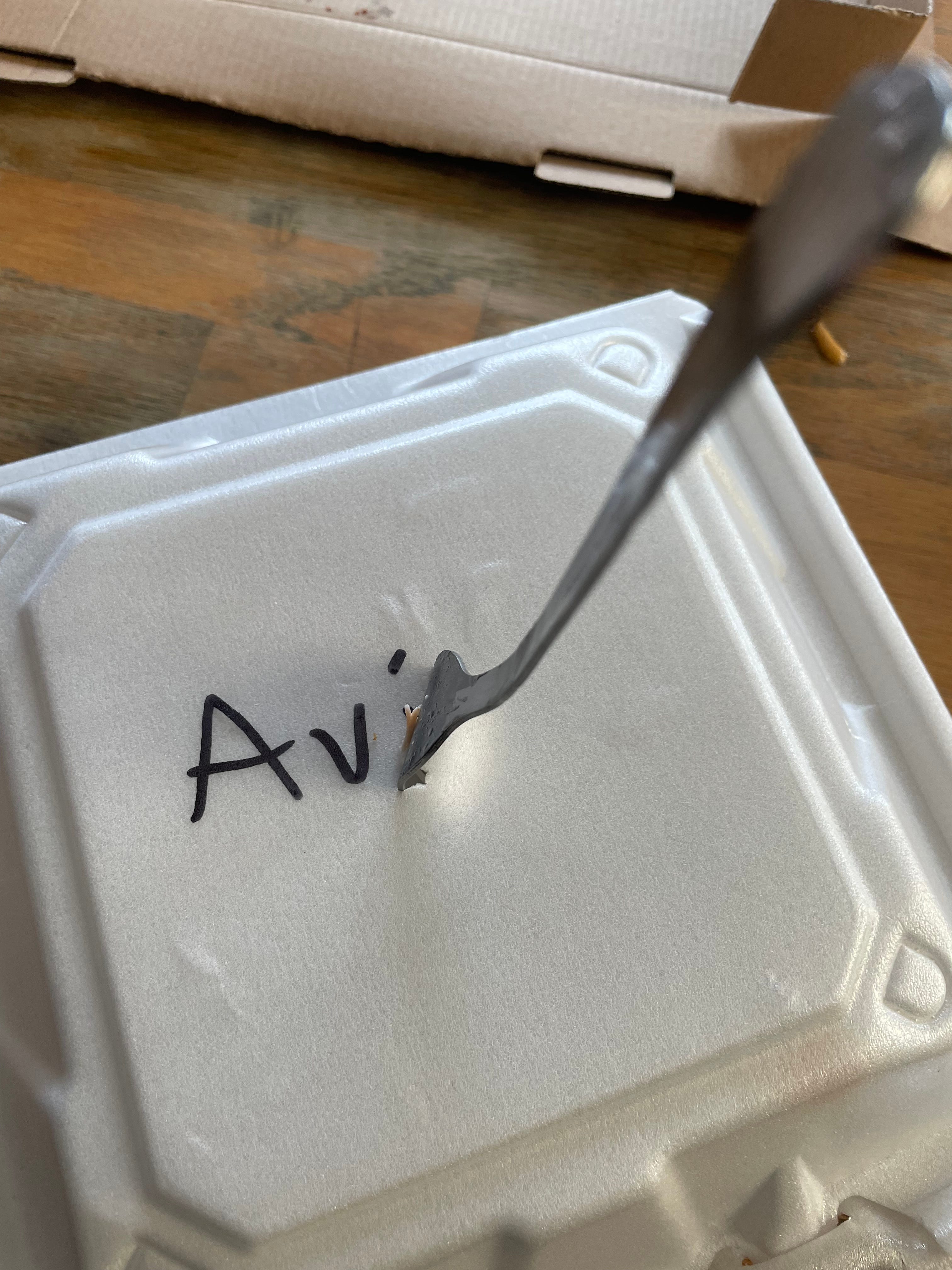
As we ventured forth to the brewery, my mind meandered back to the enigmatic entity that was my lunch. I was full, and sated, ready for more work, yet had no memory of eating. And, even with the sheer bulk of edibles ingested, I was not bloated. It was the very soul of Omaha encapsulated in a clamshell container - a Midwestern manifesto of practicality over pomp, the Warren Buffet of the buffet line. In its ephemeral essence, it stood as a testament to sustenance over spectacle, a quiet nod to the heartland's heartiness. A Berkshire Hathaway Salad, not devoured, but methodically liquidated, each forkful a modest contribution to the ledger of the day, each bite a dividend in the currency of continued productivity.
A Berkshire Hathaway Salad, not devoured, but methodically liquidated.
Then, in the heart of the brewery, amongst the gleaming vats and intricate pipework, a stage was set for a performance that transcended mere entertainment. This was the setting for the Guitars For Vets graduation, a celebration that was both a culmination and a commencement, with every strum and song a testament to resilience and healing. Taylor and her band took command, turning the industrial space into a vibrant venue of vitality and verve. Amidst this backdrop of brewing, "Wagon Wheel" spun once more, its familiar chords wrapping the evening in a sense of full-circle fulfillment. Ashley's return to the stage wasn't just a performance - it was a poetic closure, a duet of past and present merging in melodious harmony.
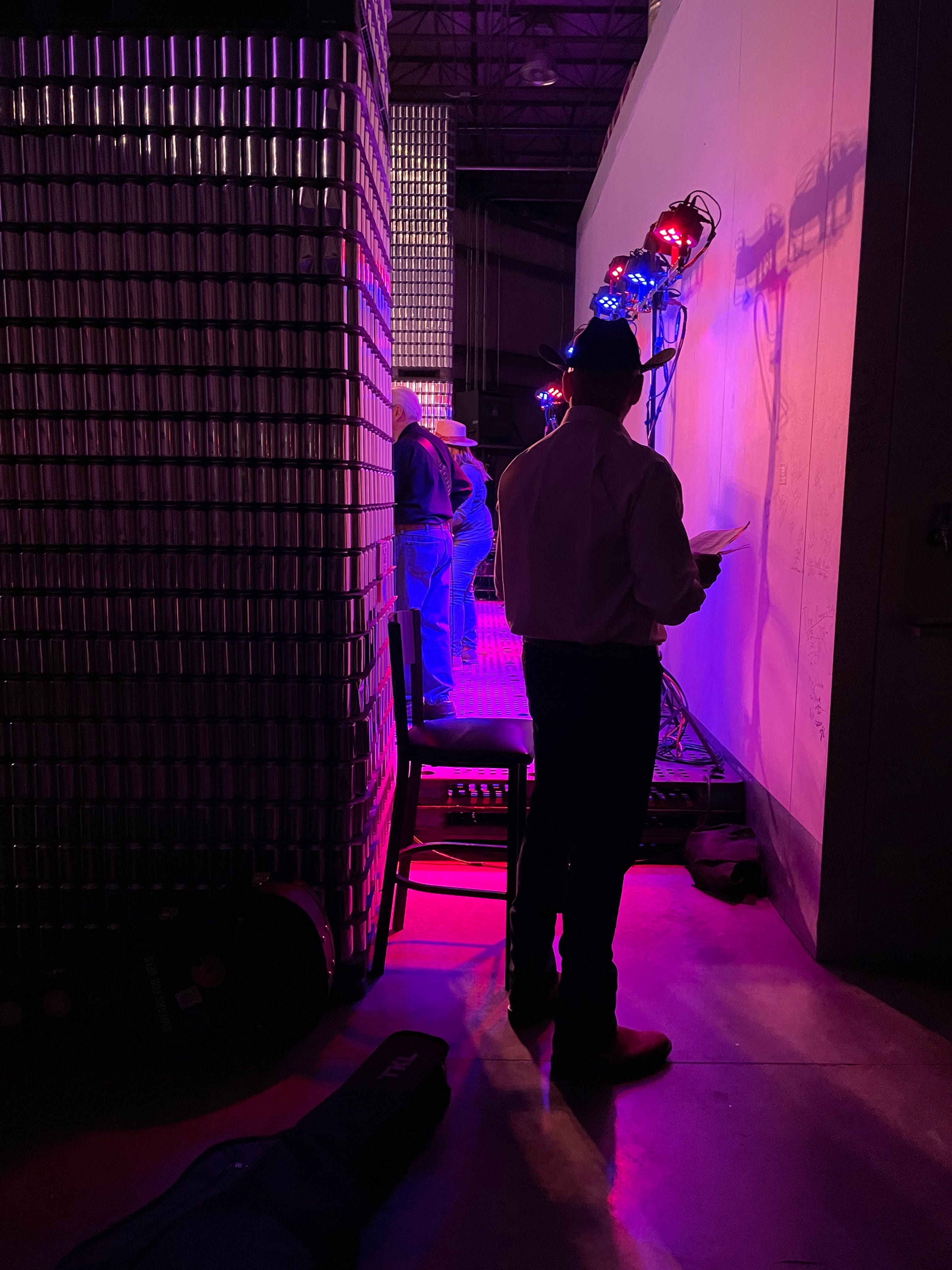
And that's a wrap!
PARTING SHOT
In 1977 a committee chaired by Carl Sagan had to decide what music to bolt to the side of a pair of spacecrafts leaving the solar system. Among the twenty-seven pieces they chose was a recording made in Dallas in December 1927 by Blind Willie Johnson. The track is called "Dark Was the Night, Cold Was the Ground." It has no words. It is a bottleneck slide and a man humming, and it lasts about three minutes.
Timothy Ferris, who produced the record, explained the pick like this: Johnson's song is about nightfall with no place to sleep, and since humans appeared on Earth, no night has fallen without finding someone in that exact situation.
Here’s the kicker. In 1945 Johnson's house in Beaumont burned down. Having nowhere else, he went on sleeping in the ruins, soaked and cold, and the next day went out to sing on the street for money and got sick. He died that September. No hospital would take him - because he was blind, and he was Black.
So the man who could not get a bed in Texas is currently about fifteen billion miles out, still humming, on a gold-plated copper disc.
And so I ask myself, and ask you to do the same - what am I creating that might last?
You had me at "Omaha"! Glad you liked the salad. But next time, be sure to try a Runza.