

So. It happened. Or rather — it’s happening!
Some of you may have already seen the Deadline piece that dropped yesterday. If not, here's the news: FILMS NOT MADE, the show I've been building for the better part of a year, launches Monday, March 2nd - debuting via a takeover of Ted Hope's Hope For Film newsletter. If you've been following along here, you know this has been consuming my every spare moment. If you haven't - buckle up.
The short version: my co-host Amy Hobby (Oscar-nominated producer, co-founder of Distribution Advocates) and I created a video podcast about unmade films - the ones that almost happened, the ones that got killed in development, the ones still sitting in a drawer somewhere making their creators crazy. Each episode, a filmmaker sits down with us and tells the story of the movie they were dying to make and the very real reasons it didn’t happen. Then we do something different: we use AI to generate trailers, posters, and stills for the film that never was - with the filmmaker right there, reacting in real time. We even have AI “executives” who pop in to give notes. It’s confessional meets masterclass meets… whatever happens when you interview a machine.
Check it out at filmsnotmade.com.
But I’m getting ahead of myself. Let me back up.
In December, I’d just wrapped a feature with my friend Brett Whitcomb down in Birmingham, Alabama. That involved such things as eating a hamburger in a place where you can also buy greeting cards, shaving cream, and adult diapers without irony. Some truths are better left intact. That whole adventure warrants its own Sound Report series at some point. We got the movie in the can, and despite getting sick on the job, I think it’s great.
Since then, I went to the very last Sundance in Park City, did post sound on a short doc, production on a film about a famous American artist, mixed an Optimum/Apple commercial…
But in every other moment, it’s been non-stop work building Films Not Made into something real. The episodes are great. The guests are great. The AI is amazingly fun. And now it’s here.
If you’re not already subscribed to this newsletter, now’s a good time - I’ll be writing more about the FNM journey, the productions, and of course, all the strange places sound work takes me. Hit that subscribe button everywhere you can, please, and come along for the ride.
More on all of it soon.
And now, back to our regularly scheduled program - Part 2 of my deep dive into country music.
Project: It’s All Country
February 27, 2024
No Donuts at Castle Kane
In the muted dawn of a Nashville morning, where the volume of life itself seemed to have been turned down a notch, our caravan, helmed by Justin with Isaac Hayes crooning from the speakers, wound its way towards Kane Brown’s abode. The landscape rolled by, a tapestry of modest ranch homes that seemed oddly sedate compared to the architectural fever dream I recalled from our scouting day. Had we taken a detour through some alternate dimension of real estate, where childlike fantasies of grandeur were manifest in stone and timber? I remembered a house, more a caricature of a castle than anything else, its battlements seemingly sketched by the hand of an enthusiastic kindergartener with a penchant for medieval dramas.
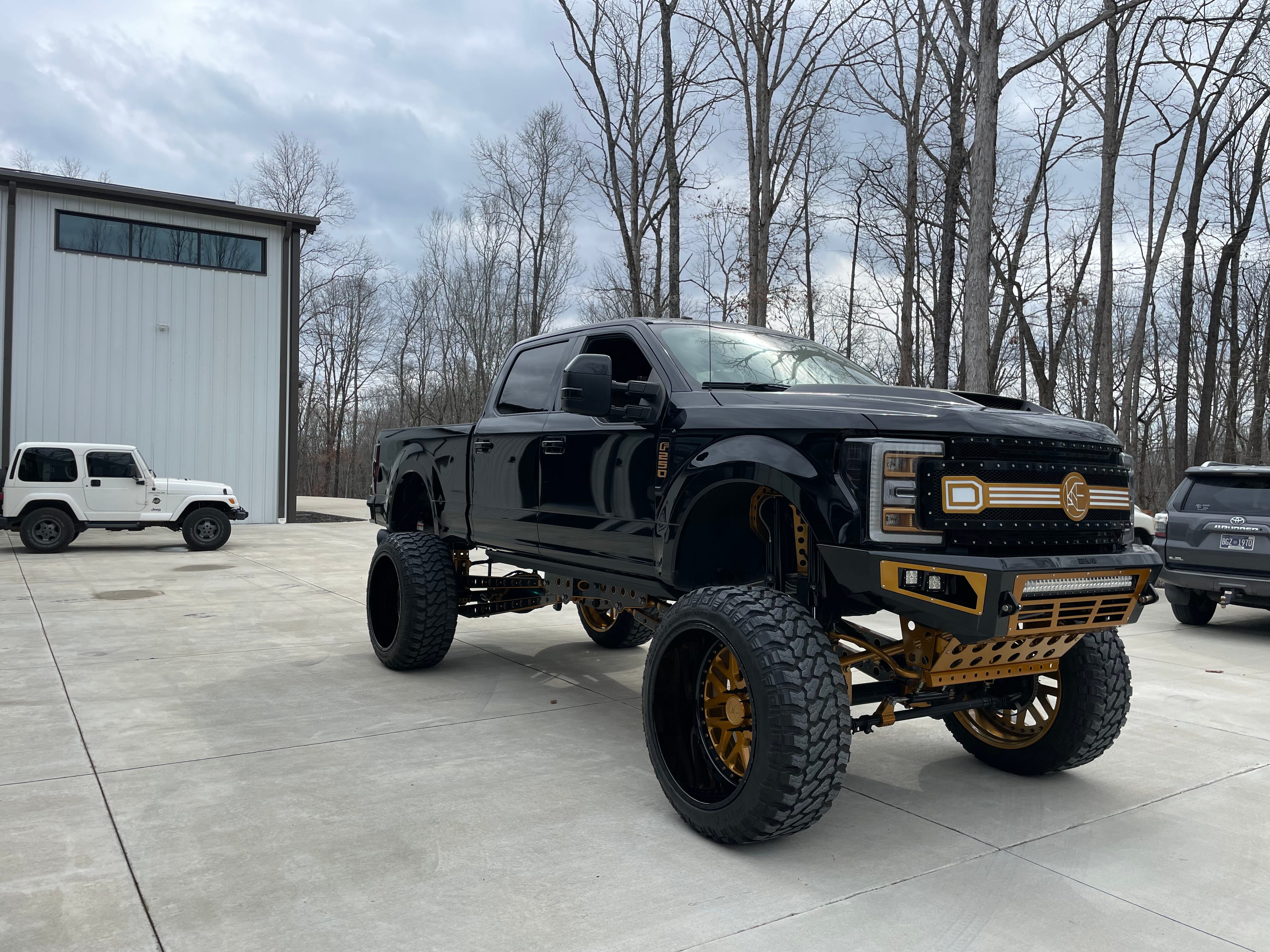
Upon our arrival at the stately (if disappointingly donut-free) grounds of Castle Kane, the absence of sugary confections was not the only peculiarity. A notably malodorous dumpster, affectionately dubbed “Stinky Pinky,” stood in stark contrast to the genteel surroundings, accompanied by a less-than-regal bathroom trailer. The morning air, thick with anticipation (and the unsettling moistness reminiscent of yesterday’s pork), hung heavy as we speculated on Kane’s imminent arrival and sartorial choices. Amidst this tableau of expectancy and olfactory assaults, a whimsical discovery was made: tiny bags of cookies, shaped like mythical unicorns, sparkled with an innocence unbefitting our grown-up palates. Yet, in a concession to the enduring magic of fatherhood, I suspected these fantastical treats were destined for a more appreciative audience, smuggled home by Justin as a culinary treasure for his daughter.
As the day unfolded at Kane Brown’s palatial estate, the atmosphere was one of jovial rivalry and high-tech leisure, a far cry from the traditional Nashville scene. The basketball court, an NBA-regal expanse, became the stage for a less-than-epic showdown between Kane and Luke Bryan. With Kane modestly downplaying his skills and Luke self-deprecatingly branding himself a “slow white boy” from Georgia, their game of PIG (a curious variant to my Brooklyn-bred sensibilities accustomed to HORSE) was more a comedic ballet than a fierce competition.
The entertainment then transitioned to the realm of virtual golf, where GOLFZON’s simulator made a spectacle of Luke’s attempts at mastery, his shots consistently veering off-course. Kane, despite his youth, embraced the “old man’s game” with a grace that belied his age, humoring Luke’s less-than-stellar performance. The promise of a simulator addition to Luke’s home hung in the air, a testament to friendly envy.
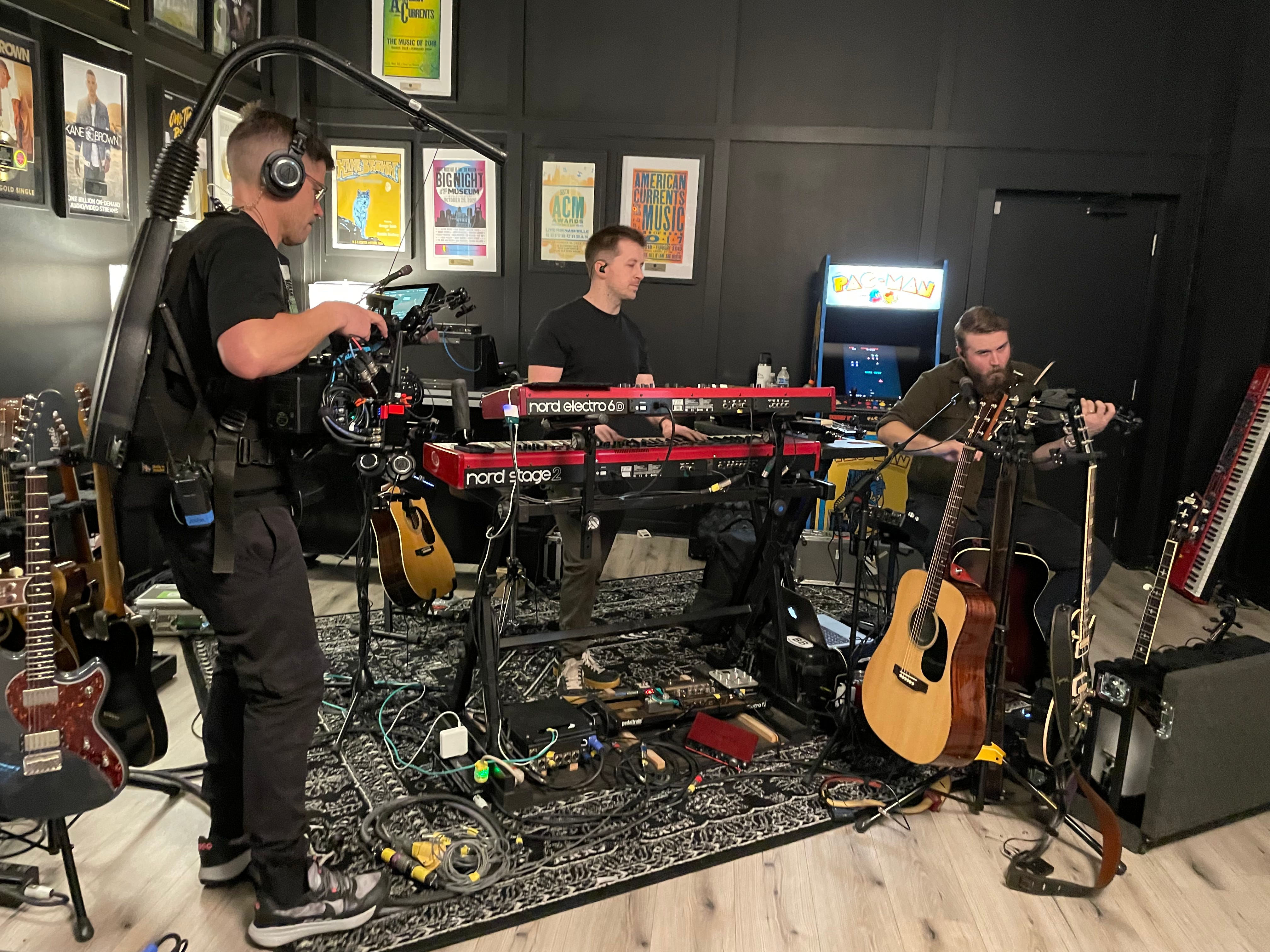
In the sanctity of the rehearsal room, the day took a more melodic turn. The band, each member cocooned in their own auditory world via headphones, created a surreal soundscape where only the drummer and fiddle player’s contributions pierced the silence. Kane’s voice melded with the virtual ensemble, while Luke found solace in lyrics that spoke to the trials and tribulations of fatherhood.
The crescendo of the morning’s escapades was a high-octane race through virtual reality, with Luke at the helm of a digital Lamborghini, navigating the twists and turns of Limerock with Kane playing the role of a digital driving coach. It was a vivid illustration of Kane’s affinity for the digital realm, whose battlefield and playground alike reside in the boundless territories of the virtual world.
While entangled in the digital web of a Zoom meeting that saw my son being lauded by his academic entourage (not to boast, but the kid’s acing it with a 100 average), the midday meal unfolded as a culinary lottery. My gaze swept past the parade of sandwich-laden box lunches, my mind half on the glowing accolades of teachers, half on the gastronomic gamble ahead. Opting for a salad that flirted with promise, boasting strawberries and an ambiguous “green,” I was pleasantly surprised to find a lush bed of leaves, crowned with roasted chicken, crunchy croutons, and enveloped in a creamy dressing that sang a harmonious tune on my distracted palate. By the time the educational accolades had wound down, my fork was scraping the remnants of a surprisingly satisfying meal, the final note a cookie that sealed the deal with sweet finality. A rare win in the boxed lunch arena.
Scott, however, wasn’t as fortunate in the sandwich department. His feedback on the club sandwich was a succinct “seriously not good,” a sentiment echoed by Michelle, hinting at a curious reversal of lunchtime fortunes where the salads outshone their bready counterparts. It’s a peculiar day indeed when the oft-neglected salad becomes the star, leaving the sandwiches to languish in the realm of “meh” to “gross.” It defies the natural order of things, where salads at sub-shops and diners are usually the culinary equivalent of an apathetic shrug, a token nod to those grazing the periphery of the menu in search of something resembling health. Yet, here we were, in an upside-down world where greens reigned supreme, and the sandwiches, well, they left much to be desired.
The tour bus scene quickly morphed into a comedy of constraints as expected when the decree came down: no filming on the moving bus, safety concerns reigning supreme. Undeterred, Justin and the crew, armed with a magician’s flair for illusion, set about crafting the semblance of a bus in motion. With lights dancing in mimicry of passing street lamps and cameras swaying gently, they conjured the convincing illusion of travel without ever leaving the parking lot. It was movie magic in its most literal sense, a testament to the ingenuity born of necessity.
Amid this backdrop of faux motion, Kane Brown unfolded his journey from humble beginnings to the summit of fame, his tales punctuated by his prowess in the virtual battlegrounds of Call of Duty. Luke Bryan, faced with this modern tapestry of gaming glory, found himself adrift in a sea of nostalgia for the simpler digital days of Metroid and Contra, struggling to bridge the chasm to today’s world where online streaming could turn play into pay.
Their conversation meandered through the landscapes of their pasts— from the confines of single-wide trailers to the freedom of the open road, from the intimacy of small gigs in Rome, Georgia, to the vastness of connecting with fans across the globe. As their stories unfolded, the bus, stationary yet filled with the motion of lives lived in full throttle, grew warm with mouth-air and memories.
In a tête-à-tête that peeled back the glossy veneer of stardom, Kane Brown unfurled the scroll of his journey with a disarmingly down-to-earth air, reminiscent of someone recounting a rather involved dream rather than a chart-topping reality. His phone, a digital reliquary of song titles and nascent dreams, was the silent witness to his ascendancy from the aisles of Lowe’s to the luminous heights of Nashville’s firmament. “Used to Love You Sober,” more oracle than single, heralded his arrival on music’s center stage, a melody plucked from the ether of a dream.
Kane’s saga, underscored by an unwavering allegiance to his gut and the gossamer threads of dreams, was punctuated by moments of surreal disbelief—like mistaking a label’s overture as a hoax. Yet, it was his unvarnished candor, a life lived in the open expanse of social media, that endeared him to a legion of followers, blurring the lines between the man and the myth.
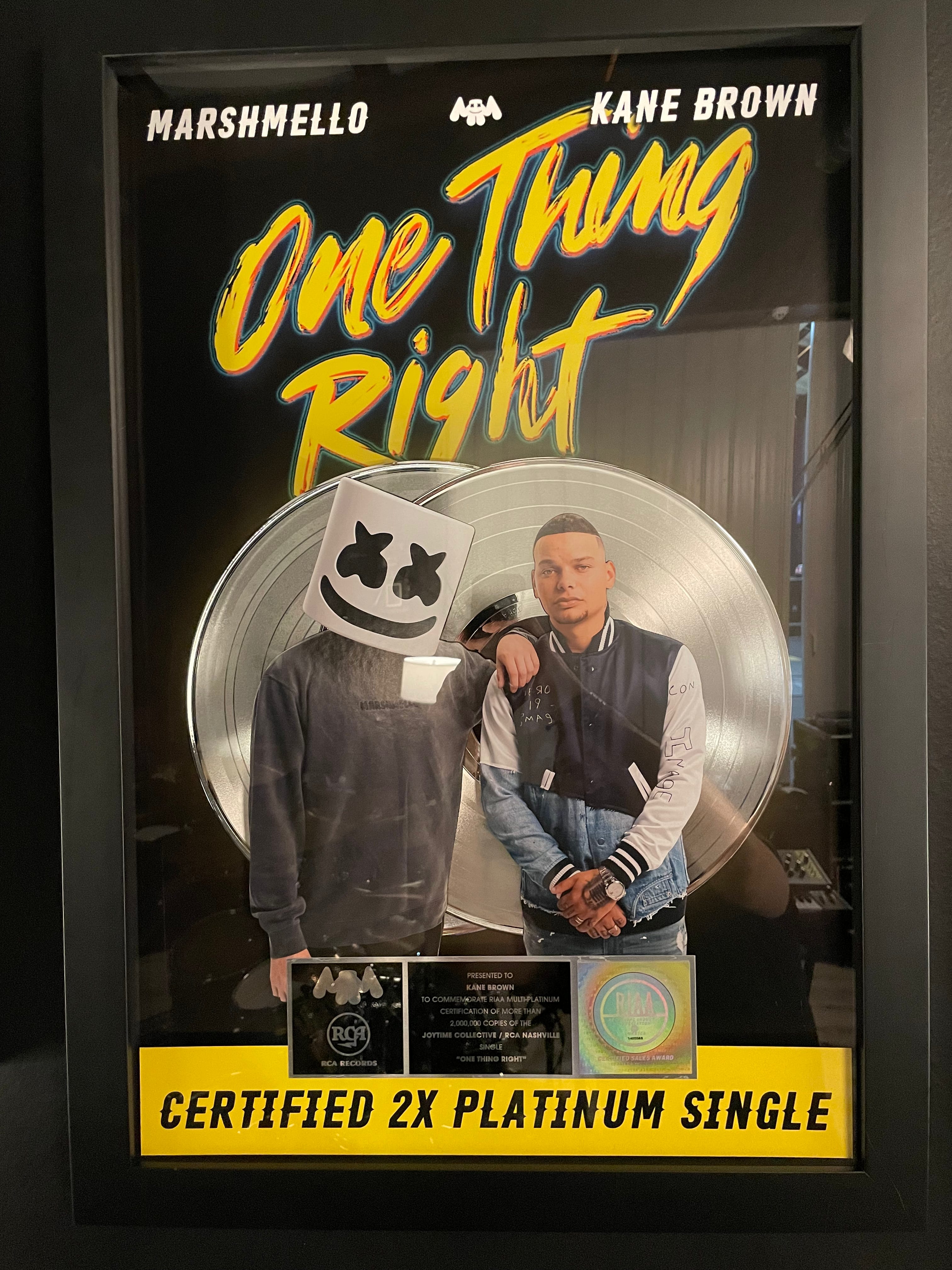
Offstage, Kane’s life unfolds with a tranquility that belies the fervor of his public persona—a tableau of domestic bliss punctuated by the digital camaraderie of gaming, a far cry from the kinetic energy of live performances. This dichotomy, the everyman in the extraordinary, underscores the essence of Kane’s appeal—a star who shines with the light of relatable, everyday joys.
Before the spotlight’s embrace, Kane’s serenades echoed through the mundane corridors of retail, a prelude to the symphony of social media that would catapult him into the collective consciousness. His narrative, a testament to the democratizing power of the internet, underscores the profound impact of authenticity in an age of digital connection.
Amid the accolades, Kane’s commitment to philanthropy remains a grounding chord, a melody of gratitude for a climb undertaken without the aid of rungs, a reminder that the true terror lies not in failure, but in overlooking the unfolding miracle of the present—a poignant reflection from a man who straddles the worlds of the ordinary and the extraordinary with equal ease.
As the day’s tapestry of interviews and impromptu gaming sessions wove itself into the fabric of memory, the ride home became a gentle interlude. Nestled within the cocoon of the van, the hum of Nashville’s evening outside a mere whisper, I surrendered to the lull of motion and the day’s residual warmth. The boundary between wakefulness and sleep blurred, and I drifted off, the day’s vibrant narratives and melodies fading into the soft embrace of slumber. It was a seamless transition, a quiet surrender to the rhythms of the road until the gentle deceleration of the van nudged me back to consciousness. We were pulling up to the hotel, the air still clinging to the day’s warmth, the night now a silent invitation to the restorative depths of sleep…
Down day tomorrow! See you Thursday!
PARTING SHOT
A few prescriptions for creativity in the age of AI
Everyone is freaking out. Fair enough. But Films Not Made exists because we decided to engage instead of spectate - and what we found was more creatively exciting than we expected. So here’s what I’d offer from the other side:
Get familiar - hands-on, not vibes. Pick one image tool, one video tool, one writing tool. Use them for two weeks. Not to master them - to develop taste. You can’t have an informed opinion about something you haven’t touched.
Build something small. A repeatable pipeline beats a clever prompt. That’s how we built the FNM creative workflow. Build the bridge from curiosity to capability.
Build your own tools. Coding assistants now let non-engineers create custom utilities that reflect how your mind works. That’s what I did - and it changed everything about how we created the show. Claude Code & Codex. Check it out.
Plan for acceleration. The tools are improving materially every six to twelve months. The acceleration is accelerating.
Anchor yourself in ethics and taste. Decide what you won’t do. Decide how you’ll protect the humans involved.
Let’s get to work - Films Not Made